Start With a Safe View
1. The springs help balance the door’s weight, while the opener supplies the force that moves it. If you can see a metal shaft spanning the header above the door, with a torsion spring fitted there, that is your first clue. The spring’s position identifies the system; you do not need to judge its tension or touch it. In Stamford, leave the inspection at this visual check if the header is blocked, the lighting is poor, or any hardware looks damaged.
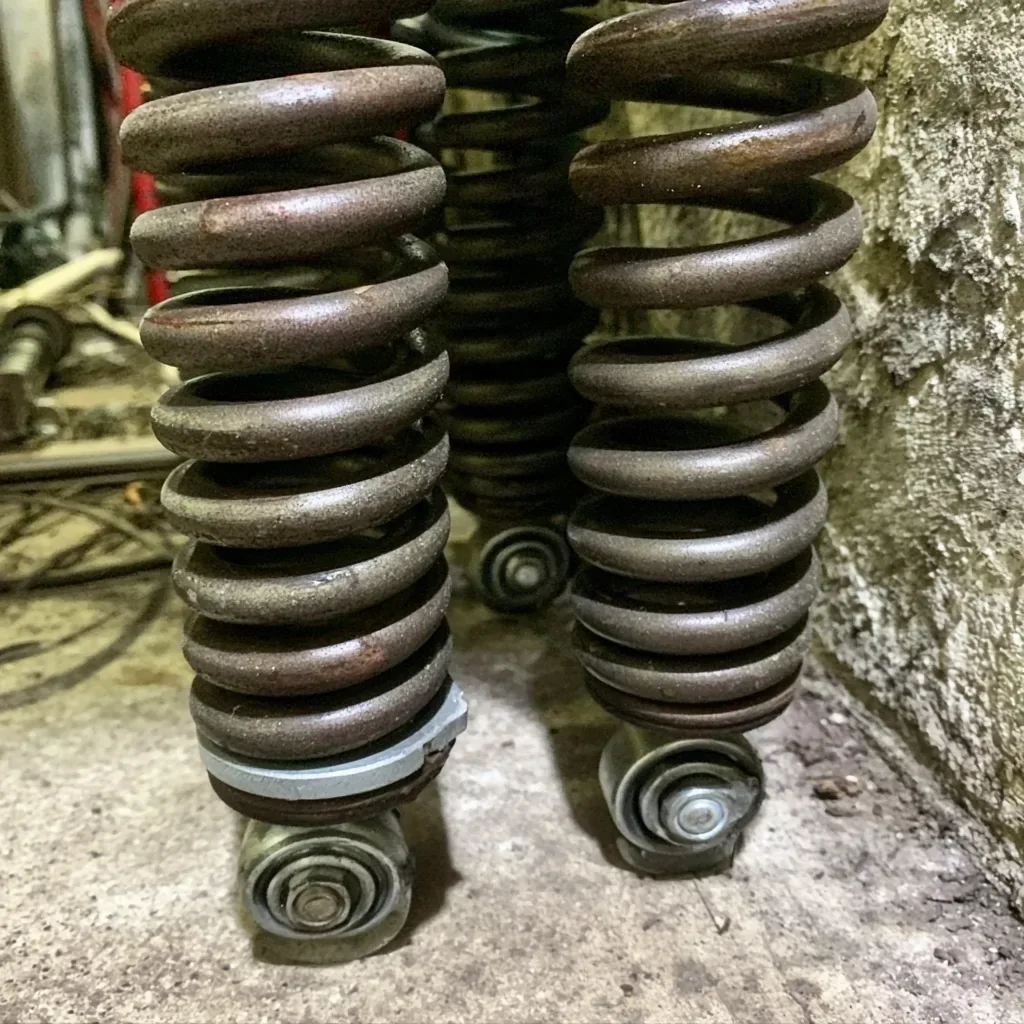
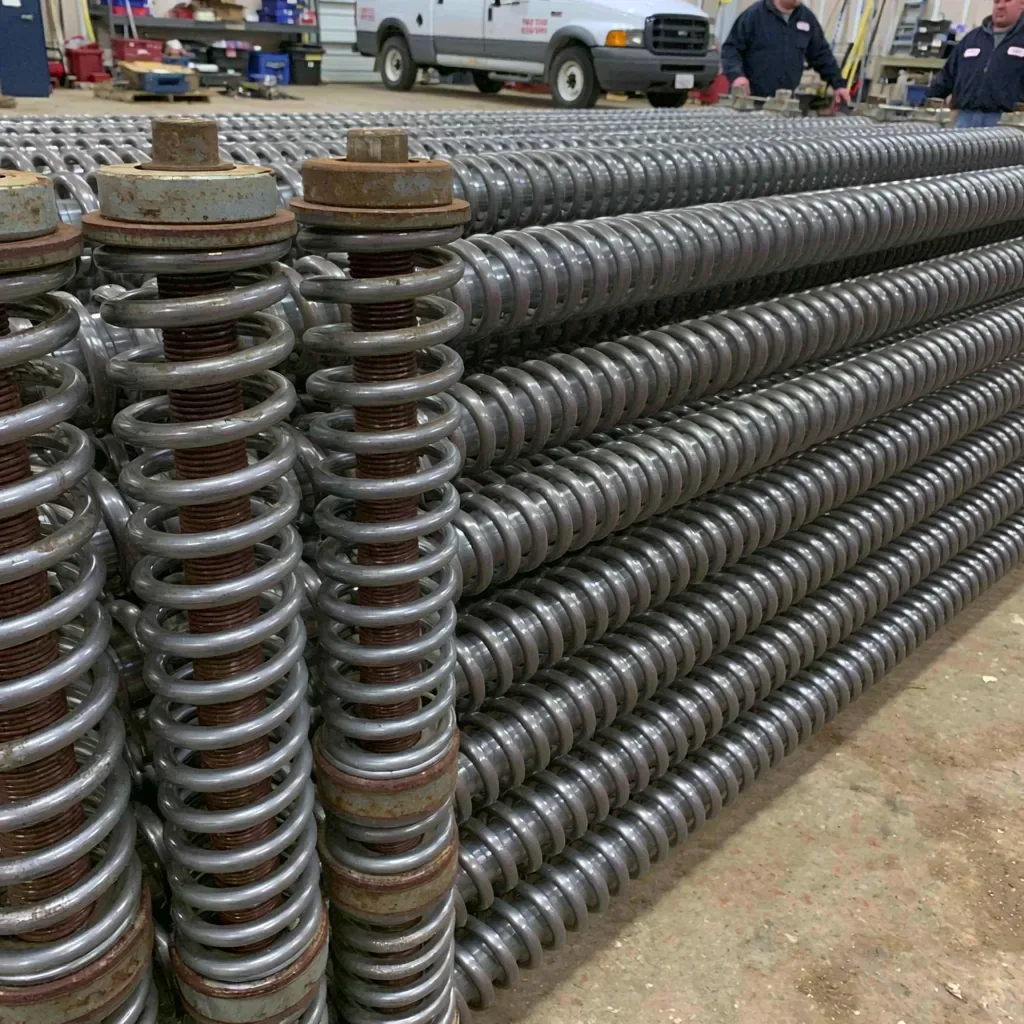
2. Look along both horizontal tracks. Long springs running beside the tracks are side springs, also called extension springs. They sit on the left and right sides rather than across the header. From the floor, check only whether that paired layout is visible; do not reach toward a coil or cable. A view from the driveway can be enough to distinguish this arrangement from a torsion spring mounted above the opening.
Check the Side Spring Clue
Look above the closed door to identify the system from a safe distance. Torsion springs sit on a metal shaft over the opening; extension springs stretch along the horizontal tracks and should have safety cables running through them. The two types are not interchangeable, and their parts are measured differently. A photo of the setup can help a technician prepare, but do not touch coils, lift cables, or brackets to confirm what you see.
4. Check whether the spring area is enclosed by a tube above the opening. Some systems hide their springs inside, so the absence of exposed coils does not by itself mean there are no springs. The opener rail runs from the motor toward the door and is separate from the spring hardware. If you see a tube but cannot identify its system from outside, mark the result as uncertain and stop there.
Mark Hidden Hardware Unclear
5. Treat a partial or obstructed view as inconclusive. A garage with stored items near the tracks, a low header, or a closed casing may hide the feature you need to see. In Stamford, do not climb, shift heavy objects beneath the hardware, or operate the door to expose it. From a safe position near Norwalk Public Library or anywhere else in town, the right checklist result may simply be “not visible.”
6. Do not use the door’s movement to decide which spring type it has. A door that sits crooked or stops partway can have a problem elsewhere in its lifting system, and movement alone does not identify the spring layout. If the door is open, hanging unevenly, or difficult to control, stay clear and do not try a balance test. The visual identification can wait until a pro can inspect it safely.
Pass the Clues to a Pro
The door’s movement can offer clues, but it cannot tell you the spring dimensions. A torsion system turns on a shaft above the door, while extension springs elongate beside the tracks as the door moves. Either design can become unsafe when a spring breaks or its cable is damaged. Do not compare them by pulling on a coil; record the door model or take a distant photo and have the hardware identified before ordering a replacement.
Replacement decisions should account for the full lift system. Spring length alone is not enough: wire size, inside diameter, winding direction, and the door’s weight all affect compatibility. Extension systems also rely on their pulleys and safety cables, while torsion setups use drums and a shaft. A pro can measure the existing arrangement and explain why the selected part fits. That check avoids fitting a spring that looks close but leaves the door poorly balanced.
Dealing with this in your home?
Call +12036338162 with the address or ZIP for your Stamford home so the pros we connect you with can check the service area directly. Greenwich Avenue, Byram Park, or Norwalk Public Library may help you describe the part of the county you mean, but a landmark cannot confirm whether a specific address is covered. Ask about availability, a workable appointment time, and any visit charge before you settle on a visit. Those details need to be confirmed directly with the pros.